MiCA Regulation (EU) 2023/1114 — In force since December 2024
VASP→CASP Transition Deadline: 1 July 2026
Offices in Düsseldorf · Vilnius · Tallinn
Free Initial Consultation

Netherlands Crypto License: CASP Authorization by DNB and AFM Under MiCA 2026
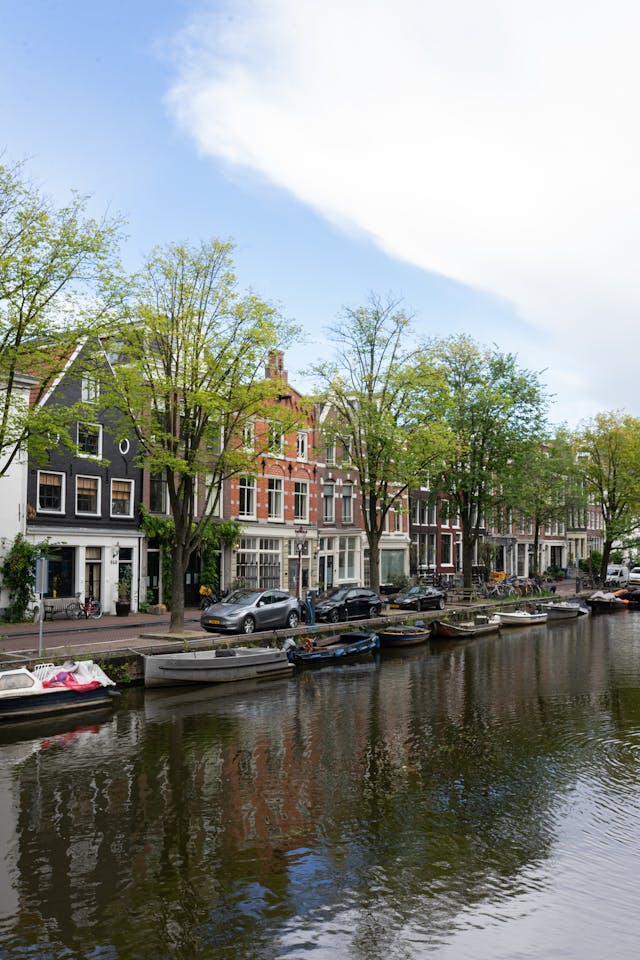
Amsterdam canal district — financial hub of the Netherlands and base for DNB/AFM CASP crypto license applications under MiCA

The Netherlands is one of Europe's most sophisticated financial markets — with high retail crypto adoption, strong institutional infrastructure, and dual supervision by DNB and AFM. Under MiCA, a Dutch CASP authorization carries high credibility with banks, institutional clients, and EU counterparties, while granting full EU passporting rights to all 27 member states. Government fee €5,000–€12,000. Timeline 4–6 months. Capital from €50,000.

Netherlands — At a Glance

Regulator
DNB + AFM (joint supervision)

Legal Entity
B.V. (Besloten Vennootschap)

Gov. Application Fee
€5,000–€12,000

Capital Requirement
€50,000–€150,000

Processing Timeline
4–6 months

NCA Review Period
Up to 65 working days

EU Passporting
Yes — all 27 member states

Language
Dutch / English

Netherlands Crypto License Under MiCA: DNB and AFM

The Netherlands has been supervising crypto service providers since 2020, when DNB (De Nederlandsche Bank) began requiring virtual asset service providers to register under the Dutch AML Act (Wwft — Wet ter voorkoming van witwassen en financieren van terrorisme). This early supervisory experience means Dutch NCAs are well-prepared for MiCA CASP authorization.

Under MiCA Regulation (EU) 2023/1114, CASP authorization in the Netherlands is jointly administered by DNB (prudential and AML supervision) and AFM (conduct-of-business supervision). The Netherlands is the fourth-largest EU economy and has one of Europe's highest rates of crypto ownership among retail investors — making it a strategically important market for crypto service providers.

A Netherlands CASP license is particularly valued by institutional clients, traditional financial institutions, and B2B partners who prioritize regulatory credibility. The Dutch financial system's integration with major European banking networks means that a CASP authorized by DNB and AFM often has an easier path to EUR payment accounts and banking relationships than CASPs from smaller jurisdictions.

DNB/AFM Dual Supervision

The Netherlands operates a twin-peaks model of financial regulation. DNB supervises prudential matters (capital, liquidity, AML) while AFM supervises conduct (market integrity, investor protection). For MiCA CASPs, a single application is submitted — but both supervisors review relevant aspects. This dual-supervision model is similar to the UK's FCA/PRA structure and is designed to ensure both financial soundness and consumer protection.

MiCA CASP Requirements in the Netherlands

🏛️
Legal Entity
Dutch B.V. (Besloten Vennootschap) with registered office in the Netherlands. Genuine operational substance — not merely a postal address. Directors with sufficient time and competency.
💶
Capital (MiCA Art. 67)
€50,000 for advisory/order services · €125,000 for exchange/portfolio/transfer · €150,000 for custody/trading platform. Own funds must exceed fixed overhead provision.
🛡️
AML/KYC (Wwft + MiCA)
Full AML program meeting both Dutch Wwft requirements and MiCA Art. 92. MLRO appointment mandatory. DNB has strict AML enforcement record — robust KYC/transaction monitoring required.
👥
Governance
At least two senior management members, all fit-and-proper under DNB/AFM criteria. Supervisory board or non-executive directors recommended for credibility with DNB.
💻
DORA Compliance
ICT risk management framework, business continuity plan, incident response, and third-party service provider management per DORA Regulation applicable from January 2025.
🔐
Client Asset Safeguarding
Segregation of client crypto-assets (MiCA Art. 70). Custody CASPs: safekeeping policy, crypto keys management policy, insurance or comparable guarantee.

Capital Requirements by Service Type

CASP Service TypeMiCA Article 67 MinimumOwn Funds Basis
Advisory on crypto-assets€50,000Or 25% of fixed annual overheads if higher
Reception & transmission of orders€50,000Or 25% of fixed annual overheads if higher
Execution of orders€50,000Or 25% of fixed annual overheads if higher
Placing of crypto-assets€50,000Or 25% of fixed annual overheads if higher
Portfolio management€125,000Or 25% of fixed annual overheads if higher
Exchange for fiat / other crypto€125,000Or 25% of fixed annual overheads if higher
Transfer services€125,000Or 25% of fixed annual overheads if higher
Custody & administration€150,000Or 25% of fixed annual overheads if higher
Operation of trading platform€150,000Or 25% of fixed annual overheads if higher

Application Process: Netherlands CASP License

1
B.V. Formation
Establish a Dutch B.V. with a registered office in the Netherlands. Notarial deed required; typically completed in 1–2 weeks. Share capital minimum is nominal (€0.01) but MiCA own funds must be maintained separately.
2
Substance Setup
Establish genuine operational substance: physical office, local management, and key functions in the Netherlands. DNB requires substance — nominee directors or letter-box companies will not satisfy fit-and-proper and substance requirements.
3
Compliance Documentation
Prepare AML/KYC program (Wwft + MiCA Art. 92), DORA ICT risk framework, client asset safeguarding policy, conflicts of interest policy, complaints handling procedure, and business continuity plan.
4
Application Submission
Submit CASP application to DNB via the official portal. Include business plan, program of operations, management CVs (fit-and-proper), capital evidence, AML policies, and governance structure. Simultaneously notify AFM where conduct supervision is triggered.
5
DNB/AFM Review
DNB reviews prudential and AML aspects; AFM reviews conduct matters. Expect requests for information (RFIs) and possible management interviews. Statutory review period up to 65 working days under MiCA Art. 63.
6
Authorization & Passporting
Authorization issued by DNB, registered in the ESMA CASP Register. Activate EU passporting by notifying DNB of intended cross-border services — home NCA forwards to host NCAs within 10 working days.

Netherlands vs Other EU Jurisdictions

JurisdictionGov FeeTimelineRegulator CredibilityOperating Cost
🇳🇱 Netherlands€5,000–€12,0004–6 months★★★★★ (DNB/AFM)High
🇩🇪 Germany€10,000–€25,0004–6 months★★★★★ (BaFin)Very High
🇱🇹 Lithuania€1,000–€2,0003–5 months★★★★☆ (BoL)Low
🇪🇪 Estonia€3,300–€10,0004–6 months★★★★☆ (EFSA)Medium-Low
🇲🇹 Malta€5,000–€15,0004–6 months★★★★☆ (MFSA)Medium

The Netherlands is optimal for firms that need high regulatory credibility for institutional partnerships or banking relationships, or that have a primary focus on the Benelux, Scandinavian, or Northern European markets. For pure cost/speed optimization, Lithuania remains the most efficient EU base for MiCA CASP authorization.

Frequently Asked Questions

Q
Which regulator issues the Netherlands crypto license?
DNB (De Nederlandsche Bank) is the lead NCA for prudential and AML supervision; AFM (Autoriteit Financiële Markten) supervises conduct. Both are involved in the CASP authorization process. DNB issues the formal authorization decision.
Q
How long does Netherlands CASP authorization take?
4–6 months typically: 1–2 weeks for B.V. formation, 6–10 weeks for compliance document preparation, then up to 65 working days (approximately 3 months) for DNB/AFM review. Complex applications may take 6–8 months.
Q
Does Netherlands CASP license include EU passporting?
Yes. A Dutch MiCA CASP authorization grants full EU passporting rights to all 27 EU member states via the 10-working-day notification procedure under MiCA Art. 60.
Q
What is the VASP transition deadline for Netherlands?
VASPs registered with DNB under the Wwft before 30 December 2024 may operate under the transitional regime until 1 July 2026 or until a CASP decision is issued, whichever is earlier. Full MiCA CASP application required — no automatic conversion.
David van Berg — Netherlands Crypto Regulation Expert
Author & Expert
David van Berg
Netherlands Financial Regulation Specialist
David van Berg specializes in Dutch financial services regulation, DNB/AFM licensing processes, and MiCA CASP authorization for crypto service providers targeting the Netherlands and Benelux markets. With a background in Dutch financial law and prior experience at a major Amsterdam law firm, David brings deep knowledge of the Dutch twin-peaks regulatory model and its application to crypto under MiCA.
€5K–€12K
Gov. Application Fee
4–6
Months Timeline
17M+
Dutch Population
27
EU Markets via Passporting
Fintech office in the Netherlands — Amsterdam is a major European hub for crypto and blockchain companies

Amsterdam: Europe's Premier Fintech Hub with World-Class Regulatory Infrastructure

Amsterdam and the broader Netherlands have long been among Europe's leading financial centres. The Dutch have a historically strong tradition of financial innovation — from the world's first stock exchange in Amsterdam (1602) to today's blockchain and DeFi ecosystem. The Netherlands consistently ranks among the top EU countries for crypto ownership, with over 20% of Dutch adults owning or having owned crypto-assets.

For crypto service providers, the Netherlands offers a compelling combination: a large, affluent retail market; strong institutional demand from pension funds, banks, and asset managers exploring digital assets; and a regulatory environment (DNB/AFM) that is rigorous but transparent. The Dutch twin-peaks model means firms get clear supervisory expectations from two specialized regulators, reducing ambiguity in the compliance process.

The Netherlands is also strategically positioned for EU passporting. Amsterdam is a major hub for European fintech operations, with strong connections to London (post-Brexit EU gateway), Germany, and Scandinavia. A Dutch CASP authorization provides excellent credibility when passporting to these high-value markets.

Related Pages

Ready to Apply for Your Netherlands CASP License?

Our team handles everything: B.V. formation, DNB/AFM application, AML/DORA compliance, and EU passporting activation across all 27 member states.

Start Free Consultation